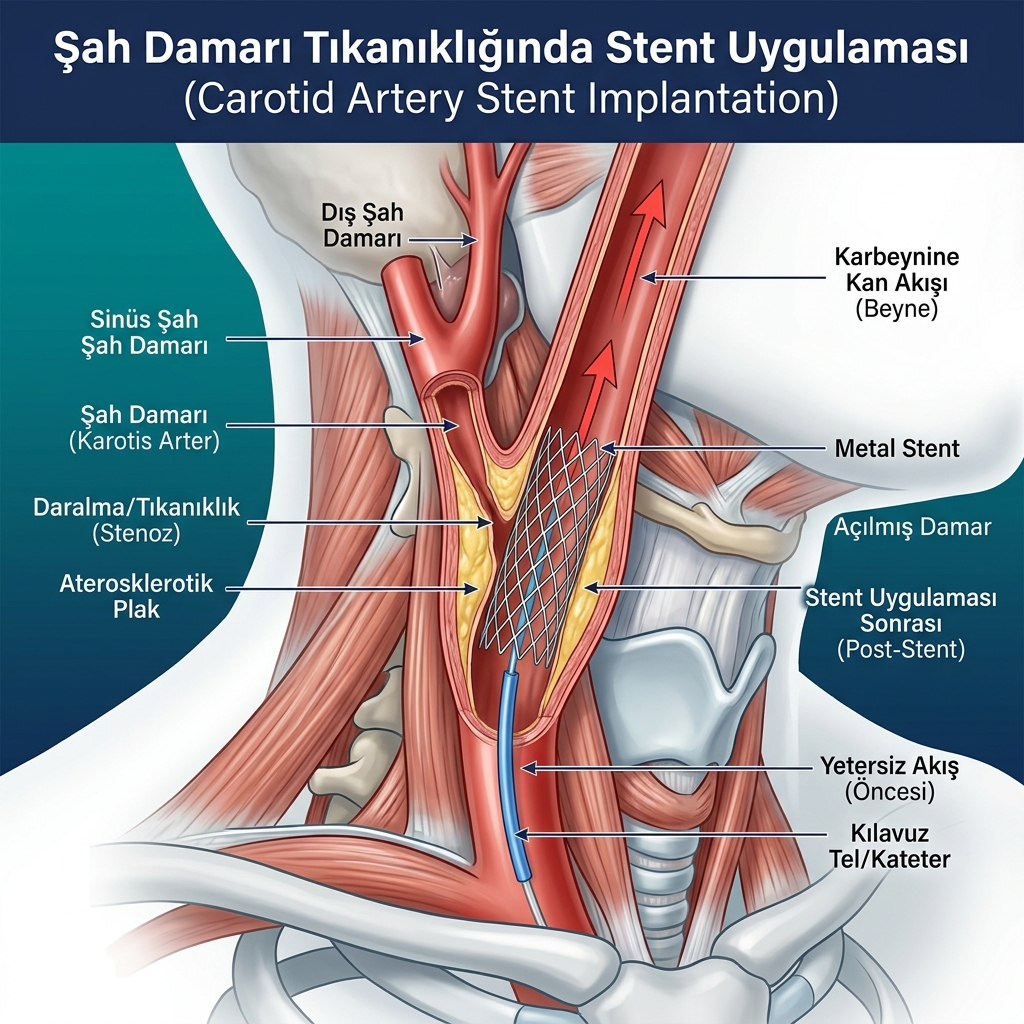
Stroke-Prevention Interventional Treatment
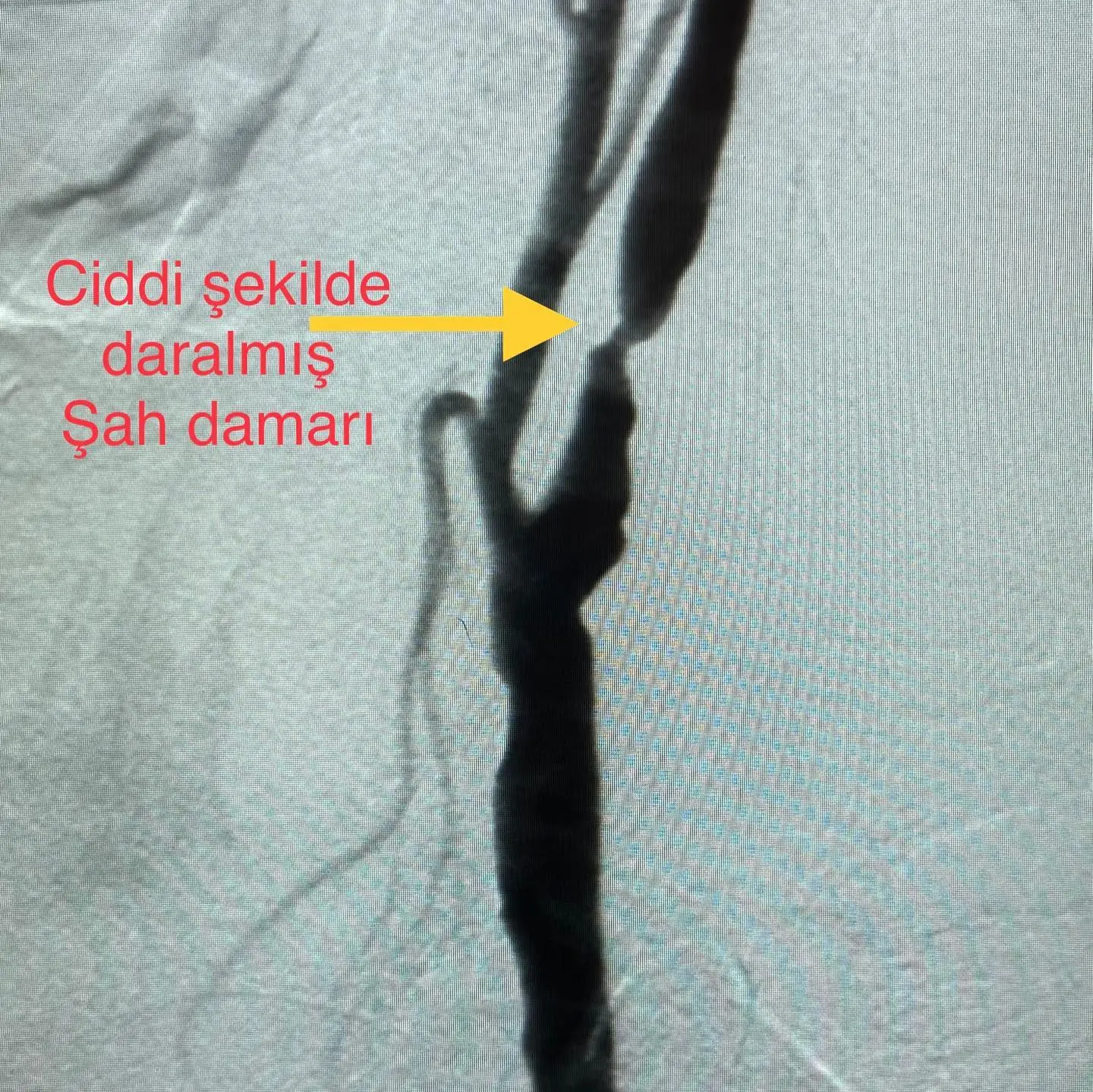
The carotid arteries are the main neck vessels that supply the brain with oxygen-rich blood. Narrowing in these arteries (carotid stenosis), caused by plaque buildup, can severely restrict blood flow or release small clots, resulting in a stroke (brain infarct). Carotid artery disease is a leading cause of preventable stroke worldwide.
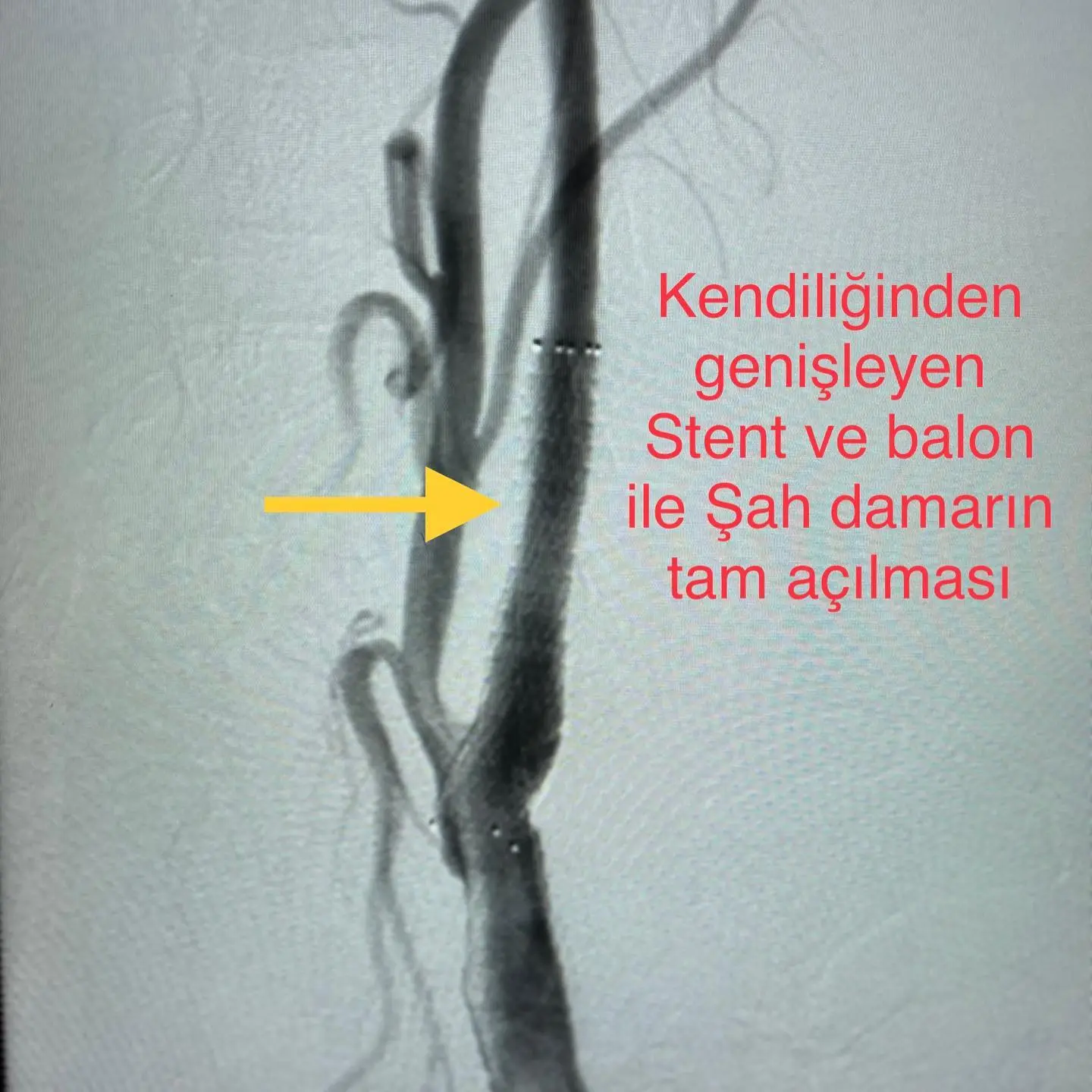
Carotid stenting is a modern, minimally invasive catheter-based procedure to open these narrowings and restore normal cerebral blood flow. Under local anesthesia, a stent (a tiny self-expanding metal scaffold) is deployed at the site of the narrowing. A temporary protective umbrella filter is utilized downstream during the procedure to capture any loose plaque particles, ensuring high safety. This approach offers an excellent, incision-free alternative to open surgery with rapid recovery.
Ideal Candidates for Carotid Stenting
- Patients with advanced, asymptomatic carotid artery narrowing of 70% or more on imaging.
- Those who have experienced a transient ischemic attack (TIA) or minor stroke with a narrowing exceeding 50%.
- Patients who are considered high risk for traditional open surgery (endarterectomy) due to anatomical factors, previous neck radiation, or severe comorbidities.
- Patients with ulcerated or unstable carotid plaques that represent a high risk of rupture and subsequent stroke.
The Step-by-Step Carotid Stenting Process
-
01
Step 1
Evaluation & Preparation
The degree of narrowing and plaque structure are assessed with Doppler ultrasound and CT/MR angiography. Blood thinners are optimized before the procedure, and local anesthesia is administered.
-
02
Step 2
Brain Protection System Placement
The narrowed segment is accessed via a catheter. A small temporary protection filter (umbrella) is placed beyond the narrowing to catch any debris that might migrate to the brain.
-
03
Step 3
Dilation & Stent Placement
The narrowed segment is gently predilated with a balloon. A self-expanding carotid stent is then deployed across the plaque, pressing it against the artery wall and restoring the vessel's width.
-
04
Step 4
Filter Retrieval & Completion
Final angiographic shots confirm appropriate stent placement and cerebral blood flow. The protective filter is recaptured, the catheter is removed, and the access point is sealed.
Benefits of Carotid Stenting
Academic Experience & High Clinical Success
- High volume of carotid stenting cases and excellent clinical safety records at Gazi University.
- Expertise in advanced navigation of tortuous neck anatomy and precise filter placement.
- FESC fellow practicing in strict alignment with international guidelines and clinical consensus.
- Comprehensive care including thorough pre-procedural planning, neurological follow-up, and medical optimization.
FAQ About Carotid Stenting
The decision is individualized based on the narrowing’s structure, age, surgical risk, and overall health. For many patients, stenting is a safe, effective, and much more comfortable closed alternative to open surgery.
As with any intervention, there is a small risk (around 2-3%). However, protective filter systems (distal protection filters) used during the procedure capture any debris and markedly reduce this risk.
Yes, dual antiplatelet therapy (blood thinners) is recommended for a period (usually at least 6-12 months) to keep the stent open and prevent clots. Long-term statins and blood pressure medication are also continued for vascular health.
Even without symptoms (asymptomatic narrowing), treatment may be advised for advanced narrowing (above 70-80%) or unstable plaque structures to prevent a future stroke. This is determined after a detailed clinical review.