Chronic Total Occlusion Intervention
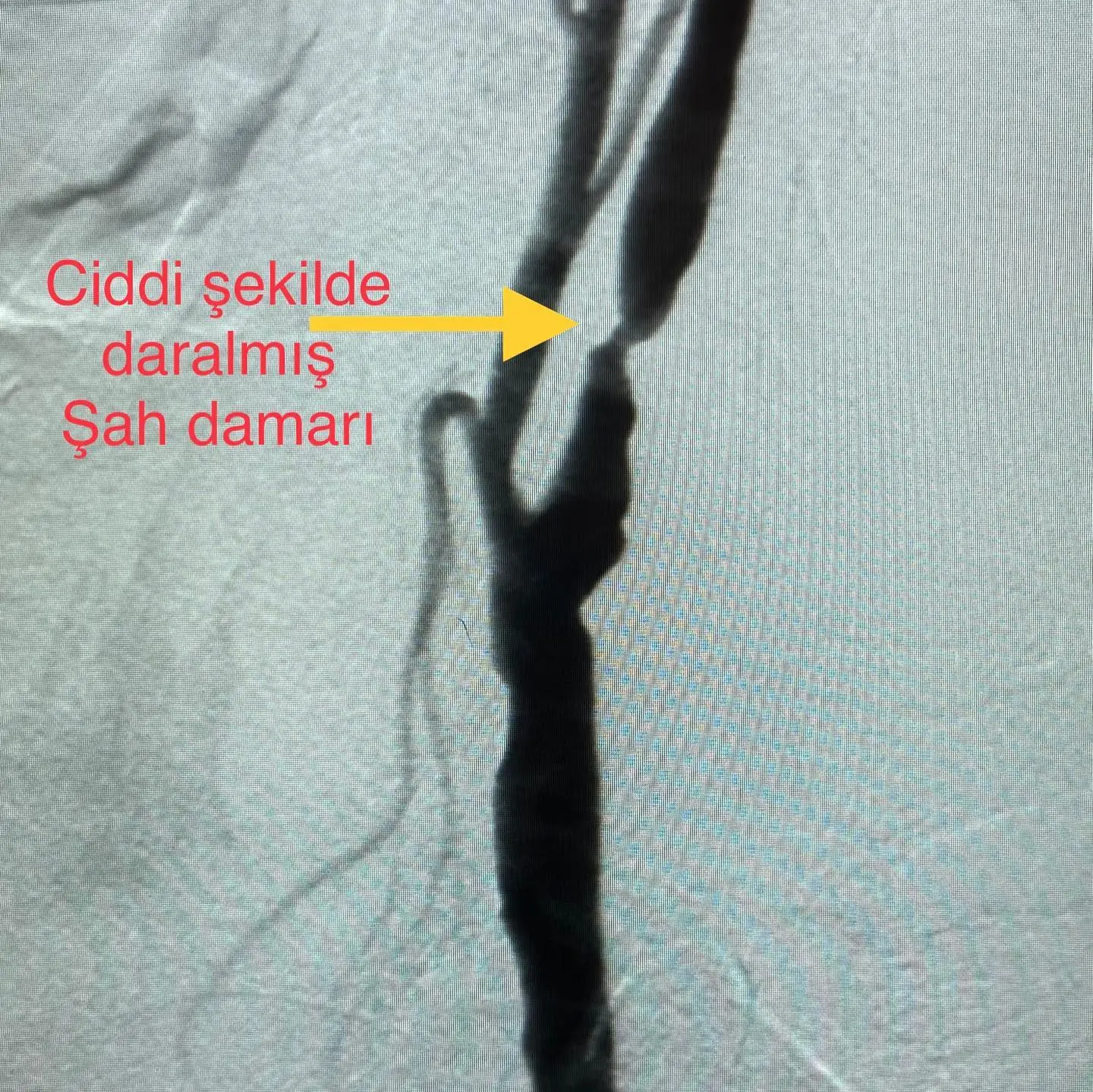
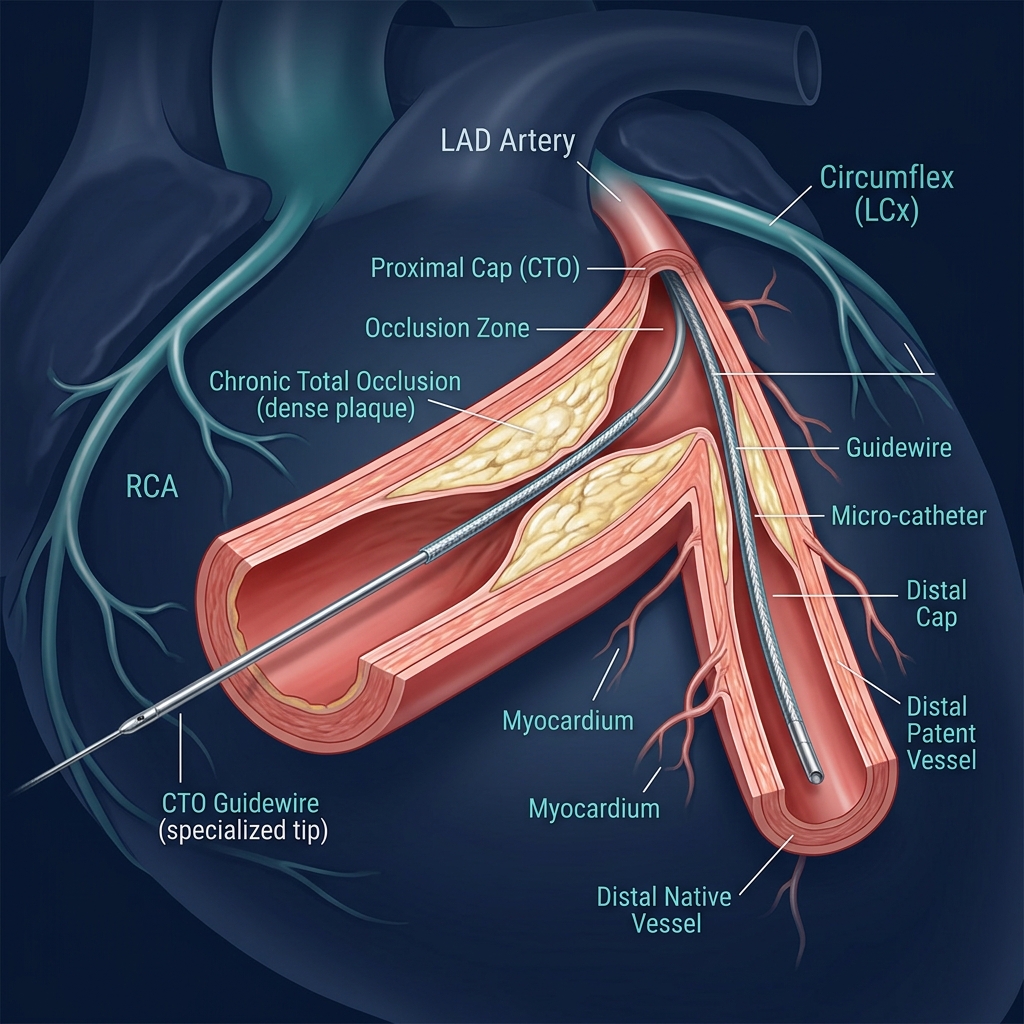
A Chronic Total Occlusion (CTO) is a coronary artery that has been completely blocked for a long time (usually more than 3 months). Because these blockages contain dense, calcified plaques, standard coronary ballooning and stenting methods (classic angioplasty) are usually unsuccessful. As a result, patients are historically recommended for open-heart bypass surgery.
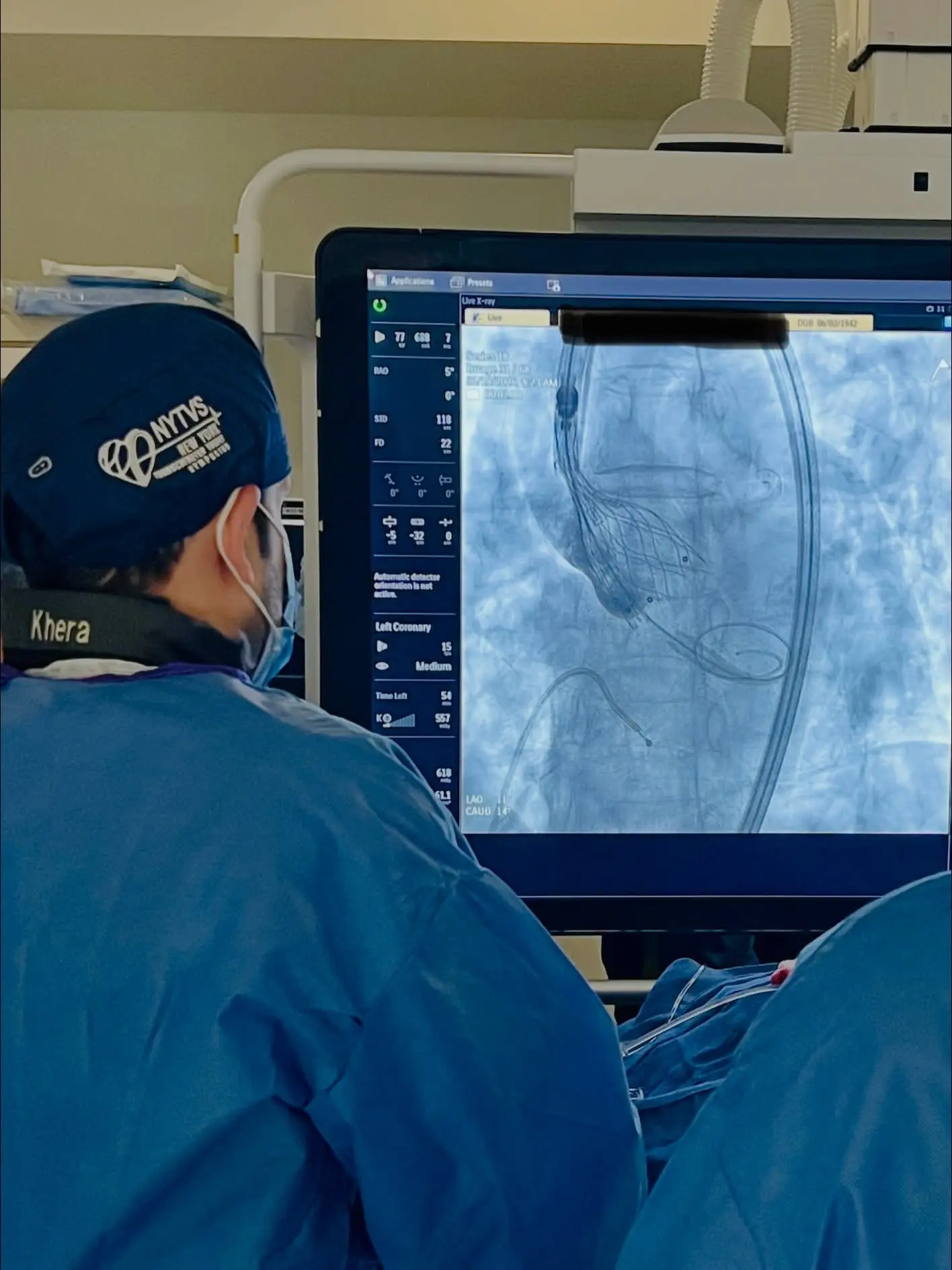
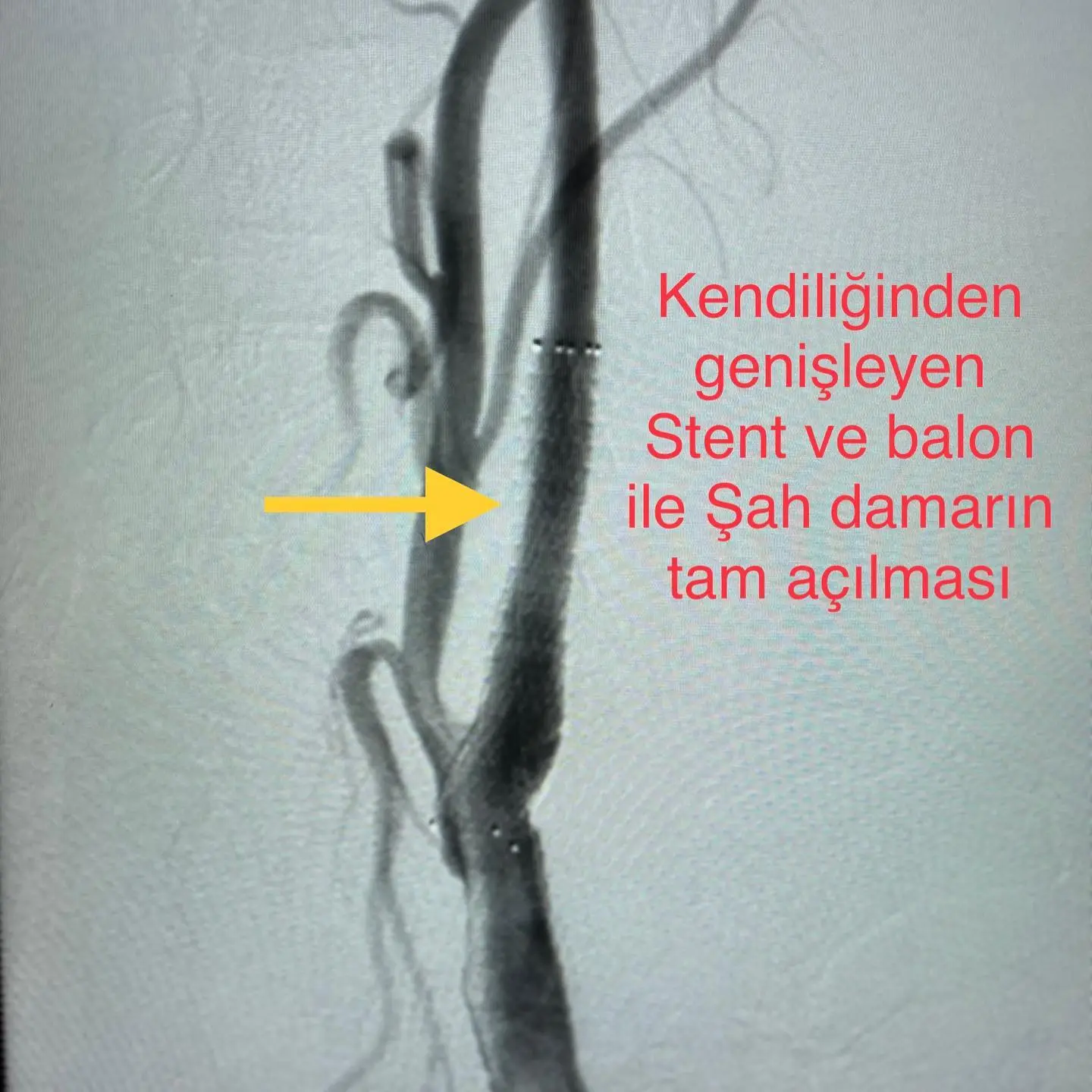
Advanced CTO interventions aim to reopen the blocked segment through minimally invasive, catheter-based techniques, without open-heart surgery. Using dedicated micro-guidewires and microcatheters, and guided by intravascular ultrasound (IVUS), the operator can cross the blockage either from the front (antegrade) or by looping around through small collateral vessels from the back (retrograde). Once crossed, the vessel is ballooned and stented to restore optimal blood flow.
Ideal Candidates for CTO Intervention
- Patients told elsewhere that their blocked coronary vessel "cannot be opened" via angiography.
- Those experiencing chronic chest pain (angina) or shortness of breath that persists despite maximum medication.
- Patients whose exercise capacity or daily physical performance is significantly limited by cardiac symptoms.
- Patients who are high-risk candidates for open-heart bypass surgery or who prefer a catheter-based solution.
The Step-by-Step CTO Procedure
-
01
Step 1
Detailed Pre-Procedural Mapping
The blockage length, level of calcification, and collateral pathways are assessed in detail using coronary CT angiography and diagnostic angiograms to design the intervention path.
-
02
Step 2
Vascular Access & Technique Selection
Radial or femoral access is established. Depending on the blockage anatomy, the operator employs an antegrade, retrograde, or combined hybrid technique to cross the obstruction.
-
03
Step 3
Crossing & Balloon Dilation
Specialized microcatheters and high-penetration guidewires cross the calcified occlusion. Once the true lumen is reached, balloons dilate the segment to prepare for stenting.
-
04
Step 4
Stenting & IVUS Verification
Drug-eluting stents are deployed. Intravascular ultrasound (IVUS) verifies full stent expansion and apposition against the vessel wall, securing long-term patency.
Benefits of Reopening CTO Vessels
Technical Competence, Scientific Rigor
- Academic supervision and clinical teaching appointment as a Professor of Cardiology at Gazi University.
- Proven track record as an invited live vaka operator in complex CTO workshops internationally.
- High rekanalizasyon (opening) success rates exceeding 90% for complex, calcified anatomies.
- Expert utilization of IVUS (Intravascular Ultrasound) imaging for precise sizing and risk reduction.
Common Questions Regarding CTO
Not necessarily. While standard angioplasty is often insufficient for completely blocked vessels, advanced CTO techniques utilizing dedicated microcatheters, hybrid access pathways, and expert operators can successfully reopen many "unopenable" vessels.
Because the vessel is 100% blocked with calcified tissue, the guidewires must be navigated through the occlusion with extreme care to avoid damaging the vessel wall. This meticulous step-by-step process naturally extends the procedure time.
The risk of complications (such as coronary perforation or renal loading from contrast dye) is slightly higher than in standard stenting. However, when performed by highly trained operators using advanced safety protocols, overall complication rates are kept low (around 2-3%).
With modern drug-eluting stents and IVUS-guided deployment, long-term patency rates are excellent, typically between 85-90%. Adhering to your prescribed antiplatelet medication and controlling risk factors (cholesterol, blood pressure) are key to preventing restenosis.